
Enterprise ANPR & LPR Architecture: Optical Character Recognition, Shutter Physics, and Deep Learning Neural Classifiers
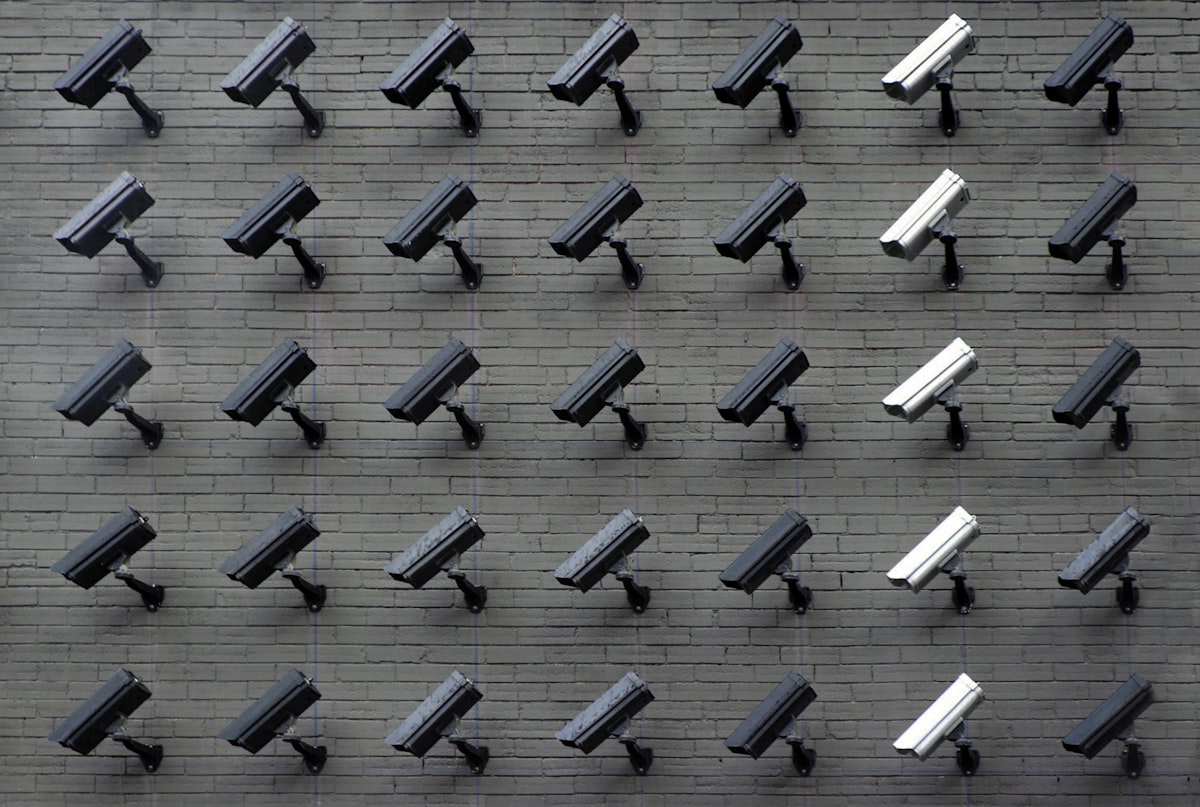
High-speed vehicle identification on highways and automated access-control" class="text-sky-600 dark:text-sky-400 font-medium hover:underline" title="Guides for Access Control">access control gates requires an uncompromising Enterprise ANPR Architecture. Modern Automatic Number Plate Recognition (ANPR / License Plate Recognition LPR) is no longer a simple image OCR script; it is a multi-stage optical-computing pipeline integrating global shutter sensors, synchronized 850nm pulse illuminators, and quantized convolutional neural networks capable of executing sub-15 millisecond inference on edge NPUs.
1. Optical Physics & Exposure Time Calculations for High-Speed Vehicles
The most frequent cause of ANPR failure is motion blur induced by excessive exposure duration. When a vehicle travels at a velocity $ across the camera field of view, the displacement of the license plate across the sensor pixels during exposure interval { ext{exp}}$ must not exceed 0.5 pixels to preserve high-frequency alphanumeric character edges.
The maximum allowable exposure time { ext{max}}$ is governed by the optical velocity formula:
Where $ heta$ is the horizontal/vertical pan angle and $ ext{PPM}$ is the pixel density across the target lane (minimum 350 to 500 PPM recommended for ANPR). For a vehicle moving at $160 ext{ km/h}$ ($44.4 ext{ m/s}$) with a $20^\circ$ approach angle and 400 PPM:
- Maximum Shutter Duration: { ext{max}} \approx rac{0.5}{44.4 imes 0.939 imes 400} \approx rac{1}{33,350} ext{ seconds}$.
- Engineered Shutter Setting: 1/2,000s to 1/4,000s paired with high-intensity pulsed Near-Infrared (NIR) stroboscopic illuminators.
| Vehicle Velocity | Recommended Shutter | Required PPM | Illumination Wavelength | Sensor Type |
|---|---|---|---|---|
| 0 - 30 km/h (Parking Gates) | 1/500 s | 250 PPM | 850 nm Continuous NIR | Rolling Shutter CMOS |
| 30 - 90 km/h (Urban Intersections) | 1/1,500 s | 380 PPM | 850 nm Synchronized Strobe | Global Shutter CMOS |
| 90 - 200+ km/h (Highways) | 1/4,000 s | 500+ PPM | 740 nm High-Output Pulsed | Global Shutter BSI CMOS |
2. Deep Learning Neural Pipeline: Localization, Spatial Transformer Networks & CRNN
An enterprise ANPR engine executes a multi-stage deep learning pipeline directly on the camera edge NPU:
- Vehicle & Plate Detection (YOLOv10 / NanoDet): Identifies the bounding box of the vehicle and extracts the sub-region of interest (ROI) containing the plate in <5 ms.
- Perspective Dewarping (Spatial Transformer Networks - STN): Automatically detects 4 corner vertices of the license plate and computes an affine homography matrix to transform angled plates into a flat, frontal rectangular aspect ratio.
- Alphanumeric Sequence Recognition (CRNN + CTC Loss): Combines a lightweight Convolutional backbone with Gated Recurrent Units (GRU) and Connectionist Temporal Classification (CTC) to transcribe alphanumeric sequences without brittle character segmentation.

3. ONVIF Profile M Metadata & Wiegand Controller Integration
Modern ANPR units broadcast structured JSON payloads over ONVIF Profile M and MQTT channels directly to building management systems, eliminating manual database polling:
{
  "topic": "tns1:RuleEngine/LicensePlateDetector/LicensePlate",
  "timestamp": "2026-08-27T12:44:02.194Z",
  "data": {
    "plateNumber": "7ABC123",
    "confidence": 0.987,
    "country": "USA",
    "state": "CA",
    "vehicleColor": "Metallic Blue",
    "vehicleType": "SUV",
    "speedKmh": 48.2,
    "direction": "Approach",
    "boundingBox": [720, 480, 240, 64]
  }
}
Conclusion & Best Practices
Deploying high-reliability ANPR systems requires balancing shutter speeds, optical pixel density (≥400 PPM), synchronized infrared illumination, and quantized edge neural networks. By adhering to global shutter sensor specifications and utilizing ONVIF Profile M event streams, engineering teams can achieve >99.2% read accuracy under all operational conditions.

Did this security guide help you?
Rate this article to help fellow engineers find the best guides.

Alex Vance
Senior Security Systems Architect & IoT Consultant with over 15 years in digital surveillance design.
Discussion (0)
No comments yet. Be the first to share your thoughts!
Leave a Comment